Dot product
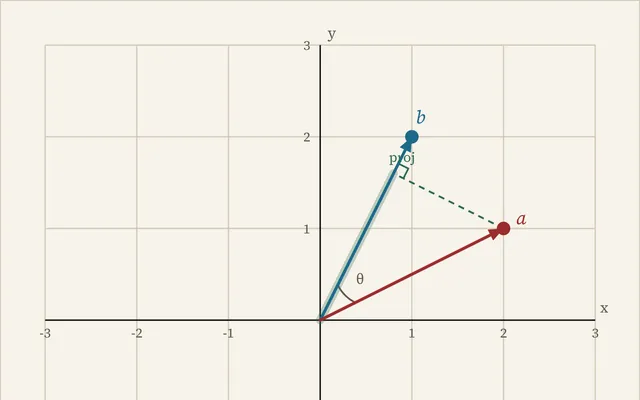
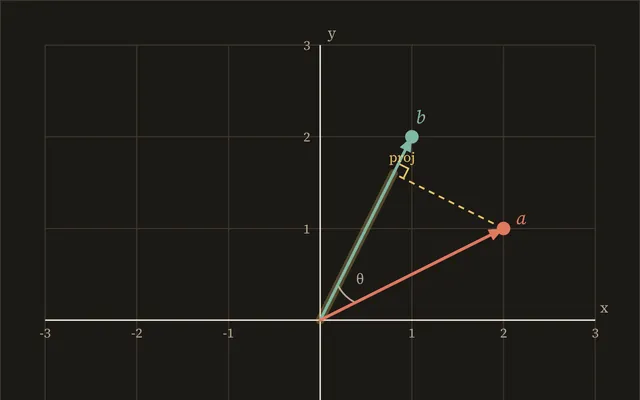
Drag two vectors and see their dot product as the projection of one onto the other.
Chapter 2: Review of vector calculus
The book’s interactive figures, each on a page of its own. Open one to explore it at full size, or follow its link to where it appears in the text.
Drag two vectors and see their dot product as the projection of one onto the other.
Chapter 2: Review of vector calculus
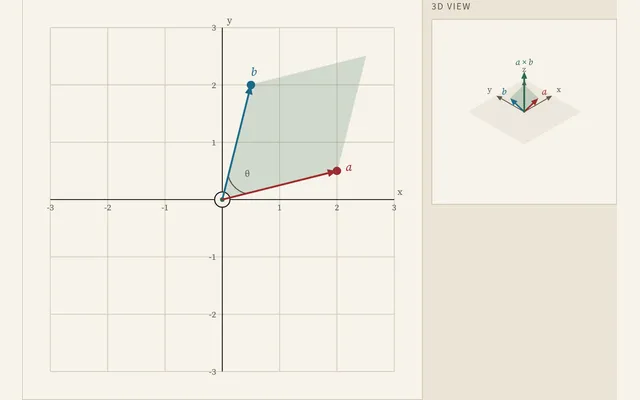
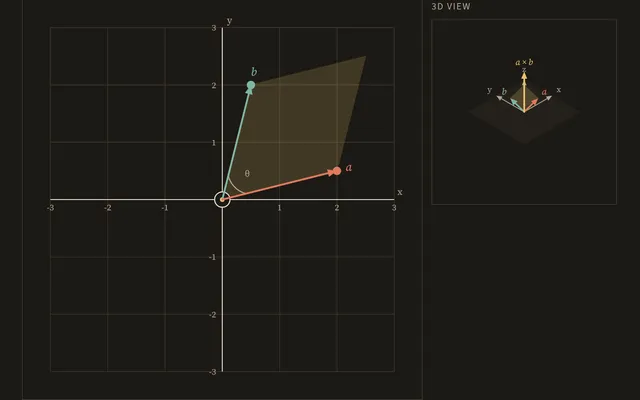
Drag two vectors to see their cross product, perpendicular to both and as large as the parallelogram they span.
Chapter 2: Review of vector calculus
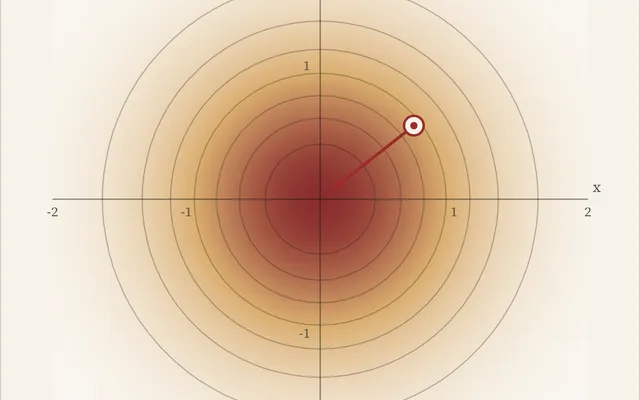
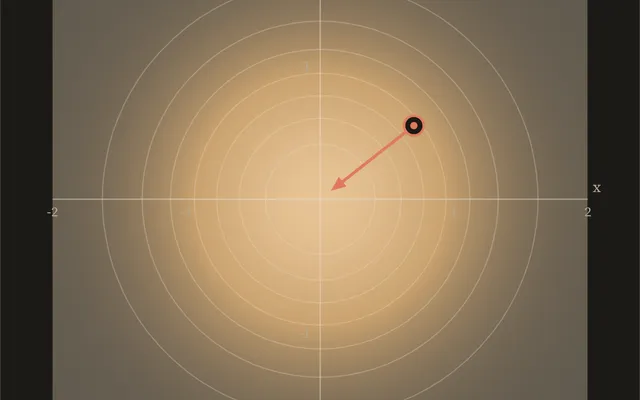
Probe a scalar field and see its gradient point uphill, perpendicular to the isolines.
Chapter 2: Review of vector calculus
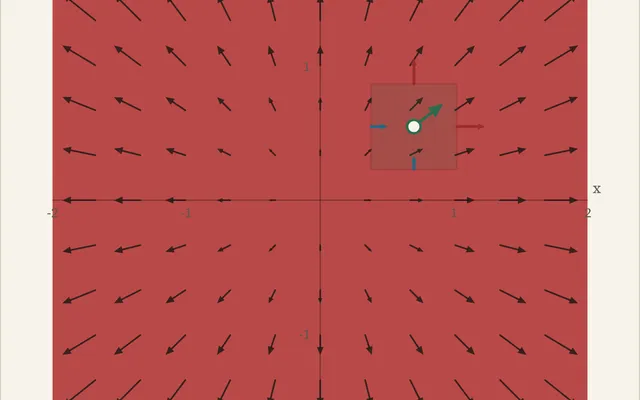
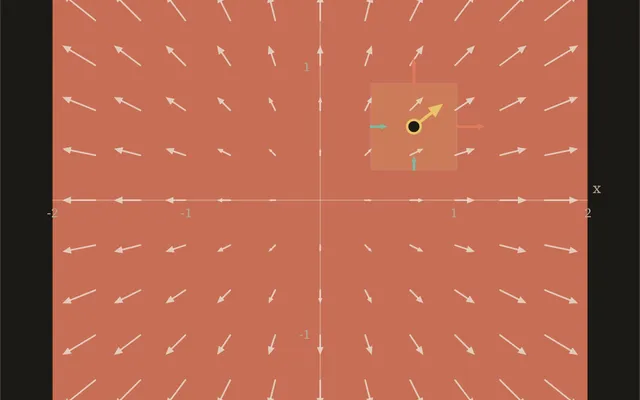
Find where a vector field is a source or a sink, from the net flux out of a small box.
Chapter 2: Review of vector calculus
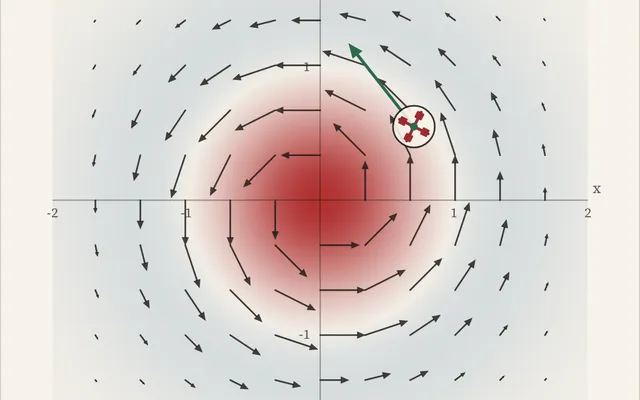
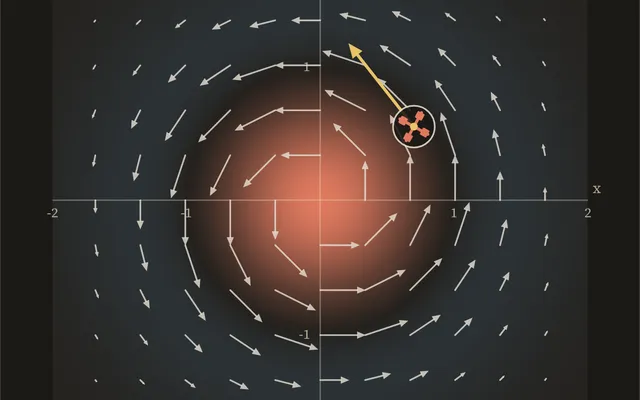
A paddle wheel spins with the local rotation of a vector field, even in a shear flow that does not circle.
Chapter 2: Review of vector calculus
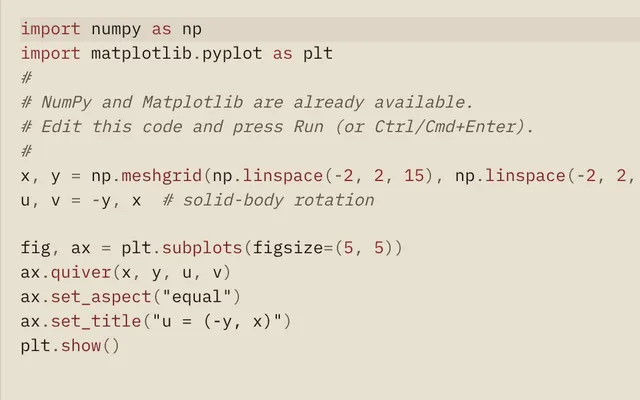
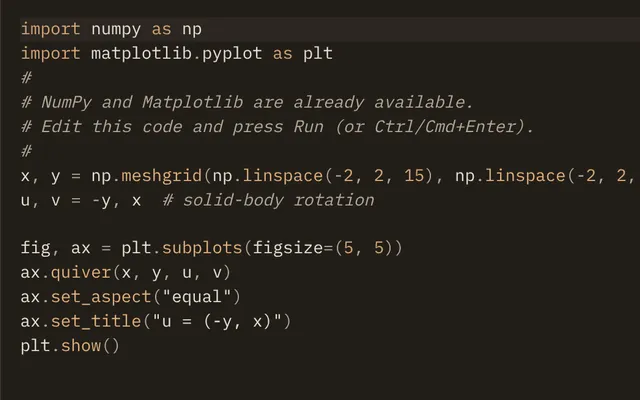
Write and run Python with NumPy and Matplotlib, right in the browser.
Chapter 2: Review of vector calculus
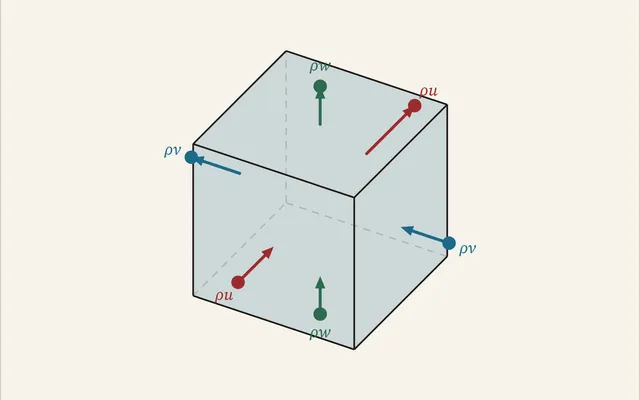
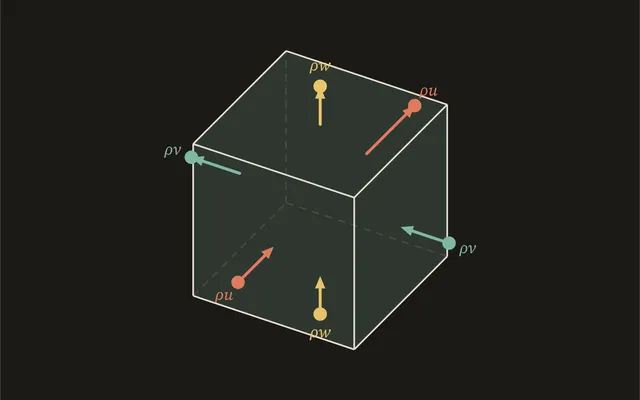
Set the mass fluxes through the faces of a fixed cube and see how fast the density inside it changes.
Chapter 4: Conservation of mass and momentum
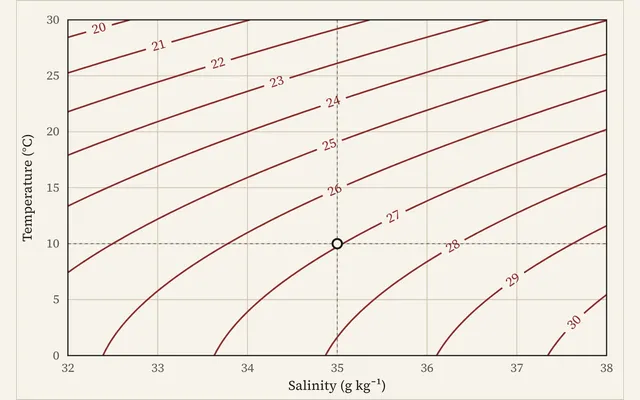
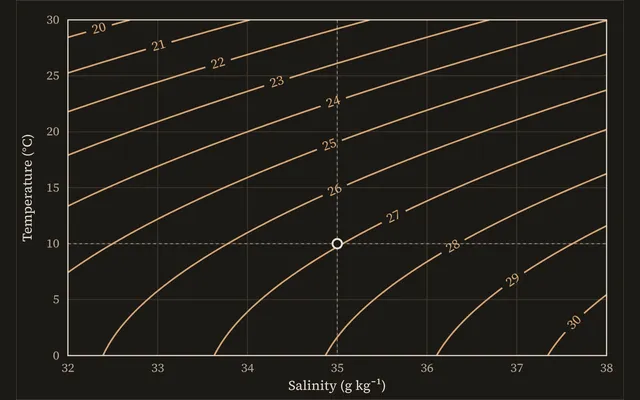
Seawater density as a function of temperature and salinity, from the sea surface down to about 10 km.
Chapter 4: Conservation of mass and momentum
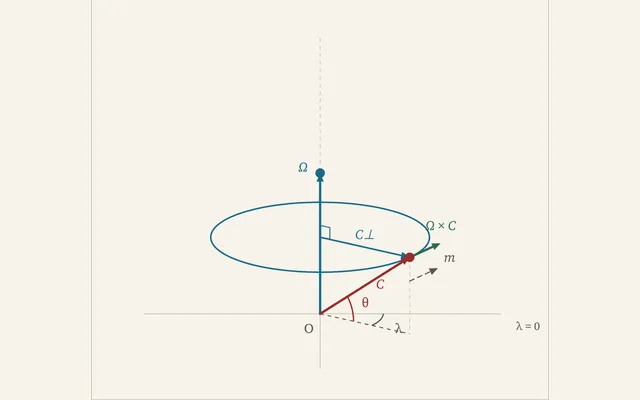
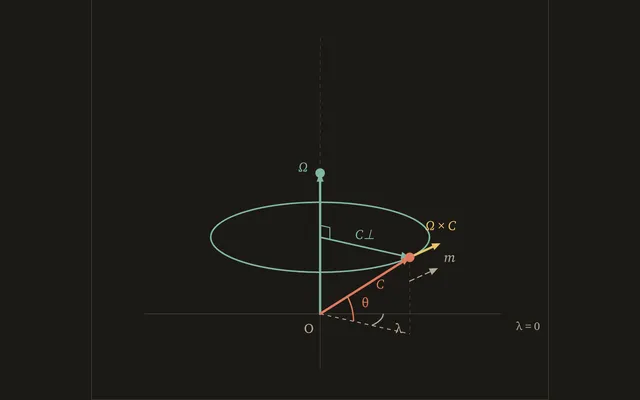
A vector fixed in a rotating frame turns in the inertial one, at the rate Ω × C.
Chapter 5: Rotating flows
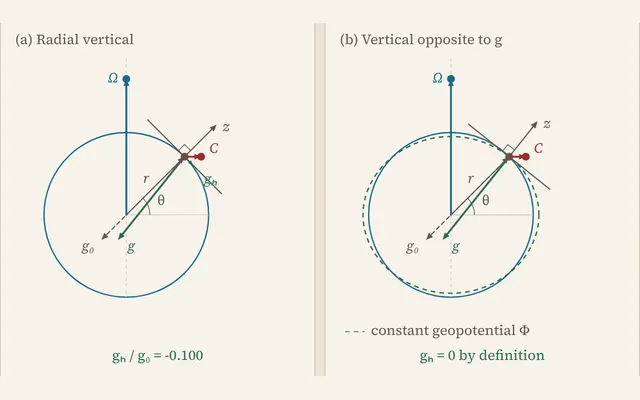
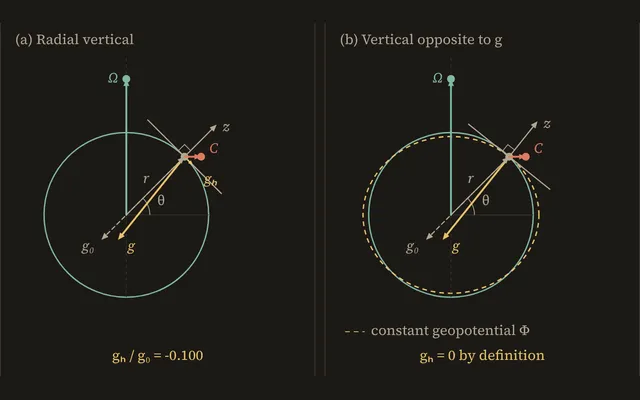
Change latitude and rotation rate to see the centrifugal force tilt effective gravity away from the radial direction.
Chapter 5: Rotating flows
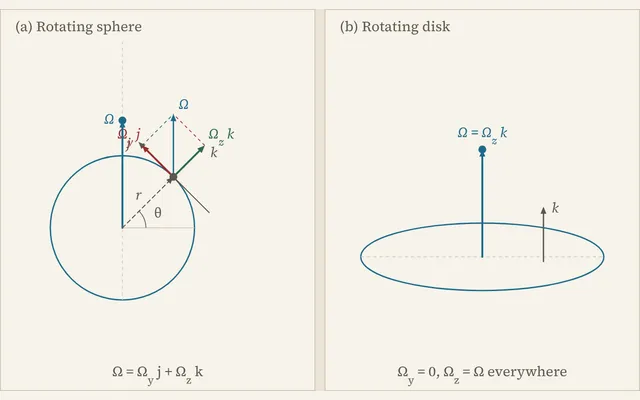
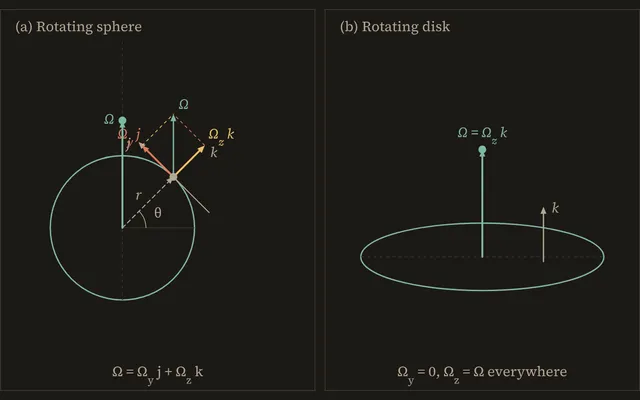
Split Earth’s rotation vector into its local vertical and northward parts at any latitude, and compare with a rotating disk.
Chapter 5: Rotating flows
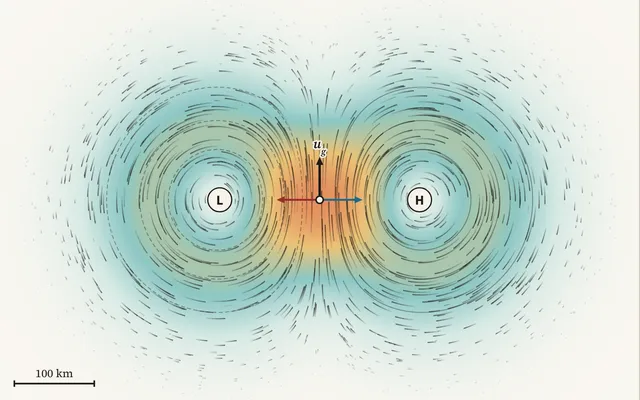
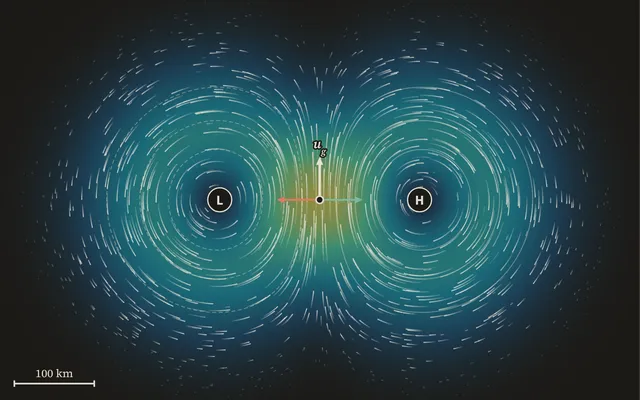
Drag highs and lows around a map and watch the flow follow the isobars, where pressure gradient and Coriolis forces balance.
Chapter 5: Rotating flows
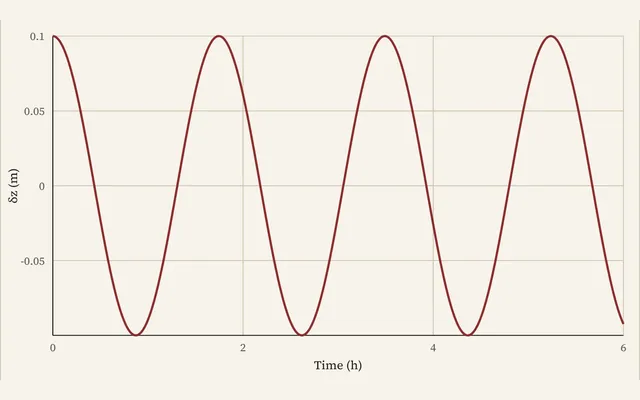
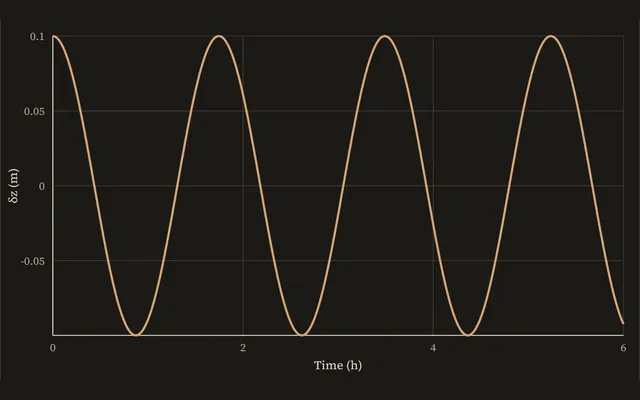
A displaced fluid parcel oscillates at the buoyancy frequency in stable stratification and runs away in unstable.
Chapter 6: Stratified flows
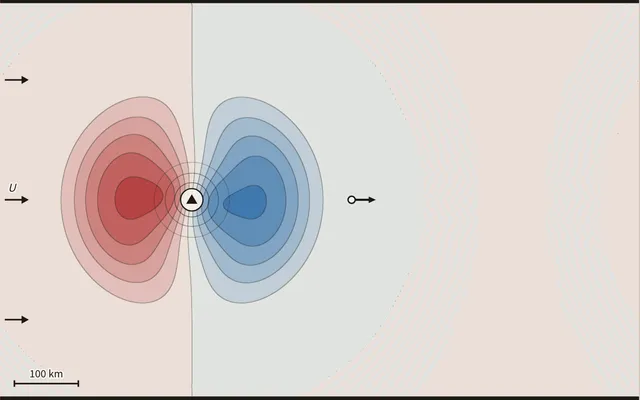
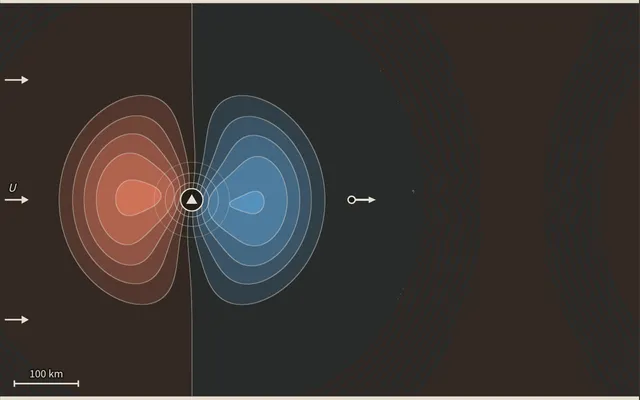
A rotating shallow water model running on your GPU: flow past a seamount, a dam break, a Kelvin wave, and more.
Chapter 7: Shallow water systems
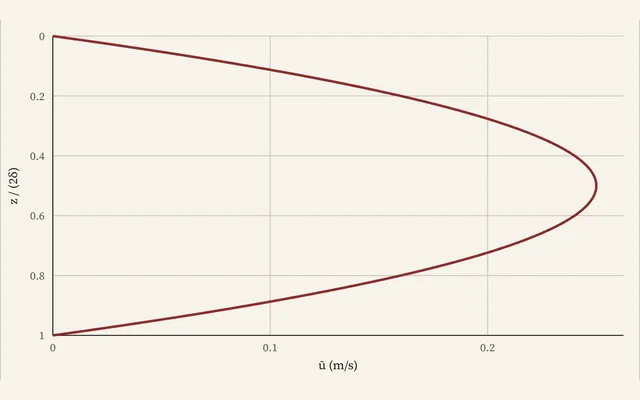
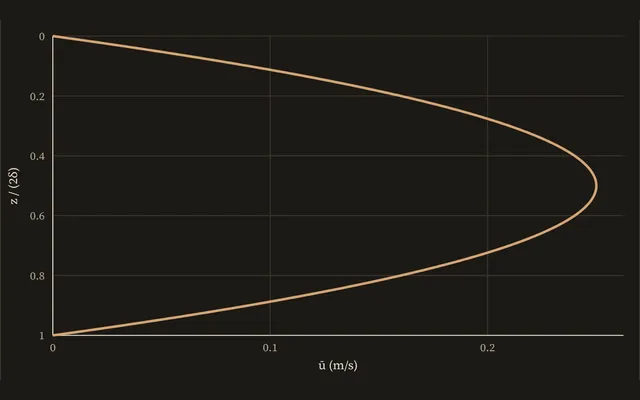
The parabolic velocity profile of laminar flow between two plates, set by the channel width and the wall stress.
Chapter 9: Boundary layers
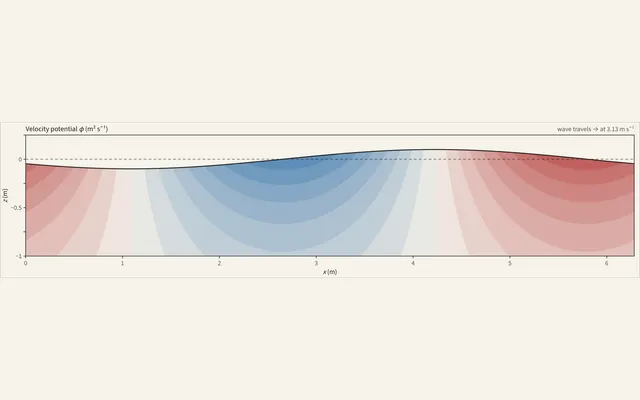
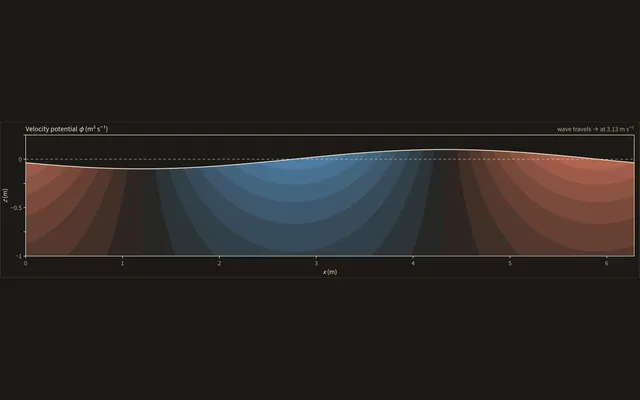
The velocity potential under a deep-water wave, traveling with it as you set its amplitude, wavenumber or frequency, and gravity.
Chapter 10: Surface gravity waves
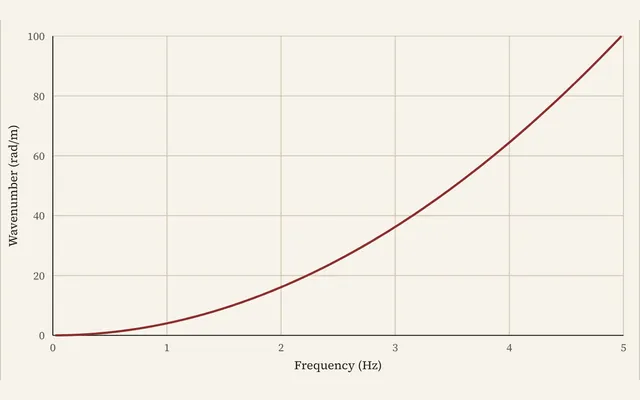
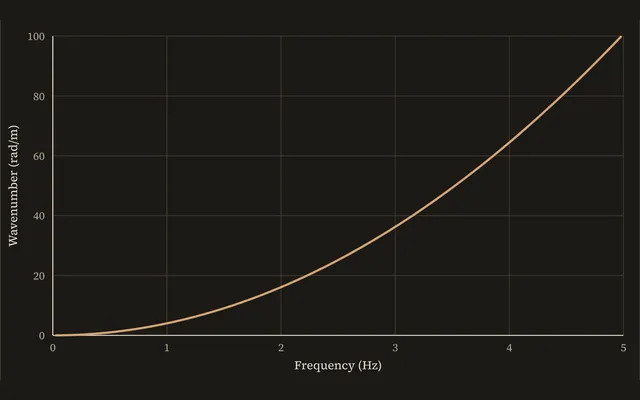
The dispersion relation of surface gravity waves, from deep to shallow water as the depth changes.
Chapter 10: Surface gravity waves
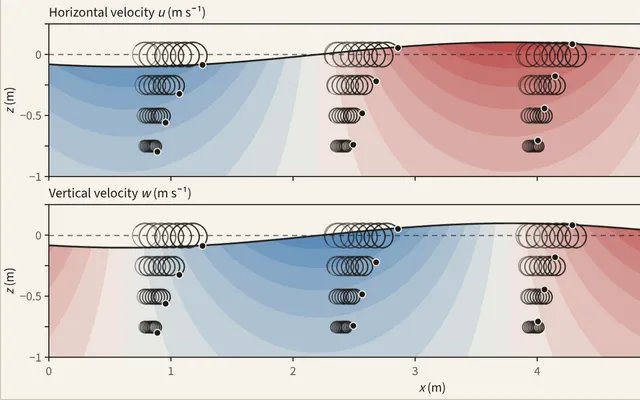
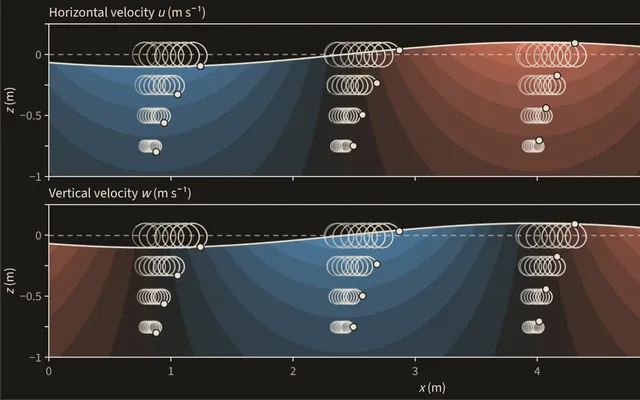
Horizontal and vertical velocities under a deep-water wave, with particles whose trails show them drifting slowly with the wave.
Chapter 10: Surface gravity waves
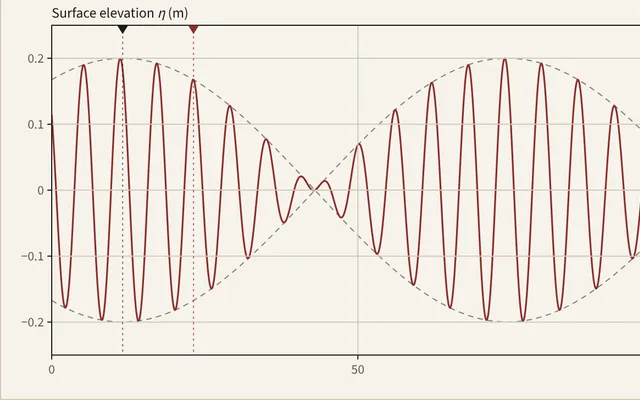
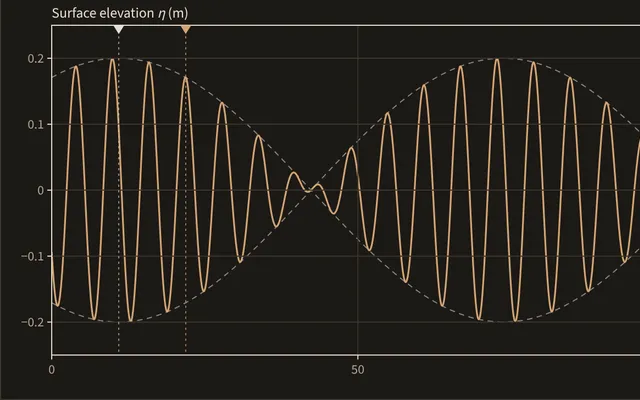
Add up wave components of your choosing and watch the crests run through the groups they form, at twice the speed of the groups.
Chapter 10: Surface gravity waves